


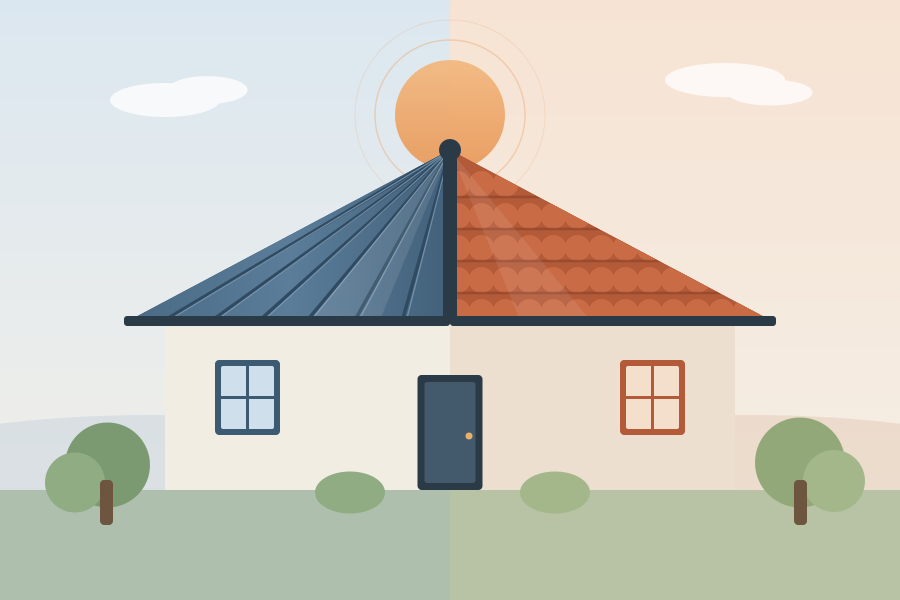
Your roof guards your family, your belongings, and the memories you carry from room to room. In Austin, that shield takes a beating from sun, wind, hail, and hard rain, so the material you pick truly matters. At Evertrue Roofing, we pair strong materials and careful installation with real care for people, not just production schedules. Our goal here is simple, help you compare metal and tile roofs, then pick what fits your needs and our Central Texas weather.
Metal and Tile Roofing Materials
Before we stack pros and cons, let’s set a baseline on what these systems are and how they work in our climate.
What Is Considered as Metal Roofing?
Modern metal roofing covers a wide range, from sleek standing seam systems with concealed fasteners to stone-coated steel that mimics shingles or shakes. Panels are usually steel or aluminum with protective coatings that fight rust and fading. The seams lock together to shed water and cut the chance of leaks at fasteners.
Metal naturally reflects a large share of solar heat. In Austin summers, that reflectivity helps reduce attic temperatures, which can trim cooling costs and make your AC cycle less often.
Beyond efficiency, metal systems score well on wind uplift ratings and fire resistance, and they shed rain fast when storms hit. That mix fits many Austin homes that want long service life and a cleaner profile.
What Is Tile Roofing?
Tile roofing sticks to a time-tested formula, using fired clay or concrete pieces arranged in courses over a waterproof underlayment. Profiles vary from flat to high-barrel shapes, each changing how water moves and how the roof looks from the street. Many Austin homeowners love the warm, classic style that pairs well with stucco, stone, and earth-tone palettes.
Tile has high thermal mass. In practice, that means the roof absorbs heat during the day, then releases it slowly, smoothing indoor temperature swings when the attic is vented and insulated correctly.
Both metal and tile can serve a Texas home well. The better pick comes from balancing style, structure, budget, and the weather you face in your part of town.
Pros and Cons of Metal Roofs

Metal sounds tough, and it is, but every material has trade-offs. Here is what usually tips the scales for our clients.
Advantages of Metal
These points show why a lot of Austin homeowners lean toward metal for a long-term upgrade.
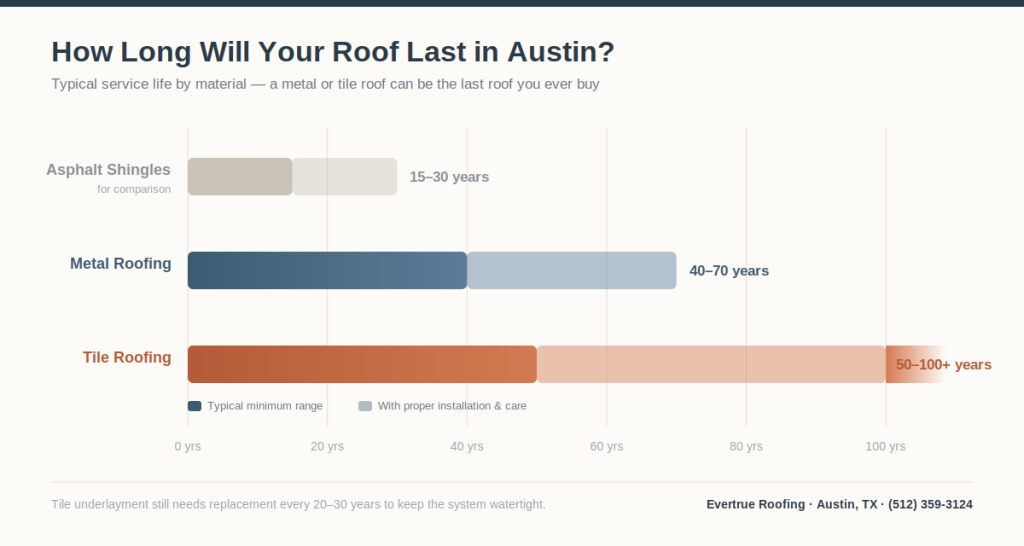
- Service life often lands between 40 and 70 years, so full replacements are far less frequent than with basic shingles.
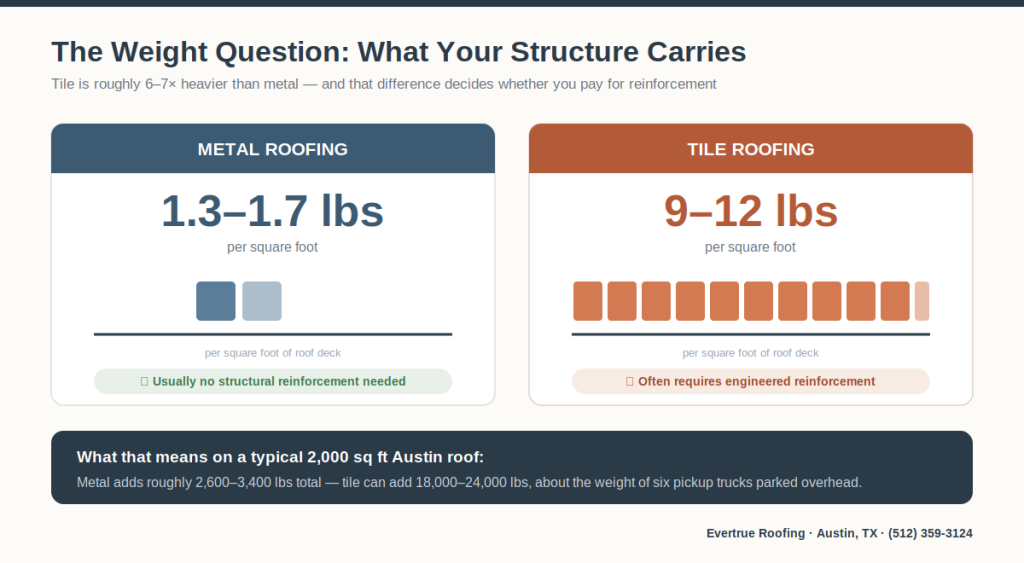
- Lightweight panels, often 1.3 to 1.7 pounds per square foot, keep loads low, which helps many homes avoid costly structural beef-ups.
- High resistance to severe winds, fire, and pests gives peace of mind in storm season and dry spells.
- Strong solar reflectance reduces heat gain, which can cut cooling bills, especially on homes with proper attic airflow.
- Panels are recyclable at end of life, a nice bonus for reducing waste.
When installed with care, metal also brings tidy lines and modern curb appeal that blends with both contemporary and farmhouse styles.
Drawbacks to Keep in Mind
Metal is not perfect, and knowing the weak spots helps you plan maintenance and budget correctly.
Upfront cost runs higher than basic asphalt shingles, so the payback leans on lower energy bills and fewer replacements over time. Metal moves a bit as temperatures swing, which puts stress on fasteners, flashings, and sealants, so the system needs crews who follow proper details from panel layout to clip spacing. In rare monster hail, panels can dent, which hurts looks but usually does not break the waterproof layer.
Pros and Cons of Tile Roofs
Tile brings a classic look and long life, but it also places heavy demands on the structure below. Here is what to weigh.
Advantages of Tile
Many Austin neighborhoods shine with tile, and for good reason.
With proper care, tile roofs often last 50 to 100 years or more. The look can lift curb appeal and resale value, especially on homes styled with Mediterranean or Spanish accents. Tile also resists fire and, thanks to its thermal mass, helps smooth indoor temperatures when the attic is vented and insulated as designed.
Drawbacks to Keep in Mind
Before signing on for tile, take a look at the structural needs and maintenance rhythm.
- Weight is high, often 9 to 12 pounds per square foot, which frequently means paying for engineered reinforcement before installation.
- Tiles can crack from big hail or heavy foot traffic, so repairs often involve replacing individual pieces after storms or service visits.
- The tiles can last a century, but the underlayment below typically needs replacement every 20 to 30 years to keep the system watertight.
- Working on tile requires careful foot placement and added time, which can raise labor costs for repairs and add-ons like solar.
If your structure is ready for the load and you love the look, tile can be a long-game winner. Just plan ahead for underlayment cycles and gentle maintenance.
To make side-by-side choices easier, the quick chart below stacks up common factors Austin owners ask about most.
| Metal vs. Tile at a Glance for Austin Homes | ||
| Category | Metal Roofing | Tile Roofing |
| Typical Lifespan | 40 to 70 years | 50 to 100+ years |
| Weight | ~1.3 to 1.7 lbs/sq ft | ~9 to 12 lbs/sq ft |
| Structure Needs | Usually no reinforcement | Often needs reinforcement |
| Hail Performance | Dents possible, waterproofing often holds | Cracks possible, repairs needed |
| Heat Management | Reflects radiant heat | High thermal mass moderates swings |
| Fire Resistance | Excellent | Excellent |
| Upfront Cost | Higher than basic shingles | Higher, plus structure costs |
| Style | Modern, farmhouse, rustic | Mediterranean, Spanish, classic |
No single box decides the winner. Your roof’s structure, your taste, and your budget all play into the best fit.
How Austin Weather Dictates Your Roofing Choice
Austin’s climate is a real stress test. Heat waves, sudden hail, and flash floods each hit roofs in different ways, so let’s match material traits to the forecast we live with.
Battling the Summer Heat
Metal roofs reflect radiant heat, which helps keep attic temperatures lower on blazing afternoons. Tile uses thermal mass, soaking up heat, then releasing it slowly as evening sets in, which smooths indoor temps when attic airflow is dialed in. Both systems, paired with good insulation and ventilation, can cut cooling costs by about 10 to 25 percent in Texas summers.
If you want cooler attic readings during peak sun, metal often takes the edge. If you prefer a more gradual shift from day to night, tile’s thermal mass brings that steadying effect.
Surviving Hail Seasons and Flash Floods
Sudden hailstorms roll across Austin fast. Metal can dent under very large stones, but the interlocking panels usually keep water out. Tile often cracks on impact, and broken pieces expose the underlayment, which then needs prompt repair to avoid leaks.
Flash floods put seams, valleys, and wall intersections to the test. Both systems rely on clean, correctly formed flashing and tight details around penetrations like vents and skylights. To keep water where it belongs, use this simple care routine after big weather:
- Schedule an inspection after severe hail or heavy flooding rain to catch hidden damage early.
- Clear debris from valleys and gutters, then check downspouts for full flow.
- Have a pro review flashing, fasteners, and sealants each year before spring storms kick up.
Small checks save big headaches, and they stretch the service life of either system in our stormy seasons.
Protect Your Austin Home With Evertrue Roofing
We treat your roof like it covers our own families, with honest advice, careful planning, and work that stands on its own. Plenty of companies rush to the next stop, but our crews slow down to explain each step, what we are doing, why it matters, and what to expect after the job wraps.
If you want a straight, friendly breakdown of metal versus tile for your home, reach out for a consultation. We will walk you through structure checks, style choices, and installation details, then back our work with clear communication. Call 512-359-3124 or visit our website.

Considering a Metal Roof? Contact EverTrue Roofing Today!
At Evertrue Roofing, we treat your roof like it protects our own family, with clear planning and careful work at every step. If you want straight answers and a free, no-pressure estimate, call (512) 359-3124 or visit our website. We welcome your questions, and we are happy to walk your roof, share photos, and build a plan that fits your home and your budget.